How Xi Jinping Made Himself Indispensable to the World
In the span of a single week in mid-May, Beijing hosted first President Donald Trump of the US and then President Vladimir Putin of Russia, and at the center of it all was China’s President Xi Jinping. This timing was not a coincidence. Everything at these summits was calculated, and they announced to the world that Xi Jinping has engineered one of the most commanding geopolitical positions in modern history. He is the one man neither country can afford to lose.
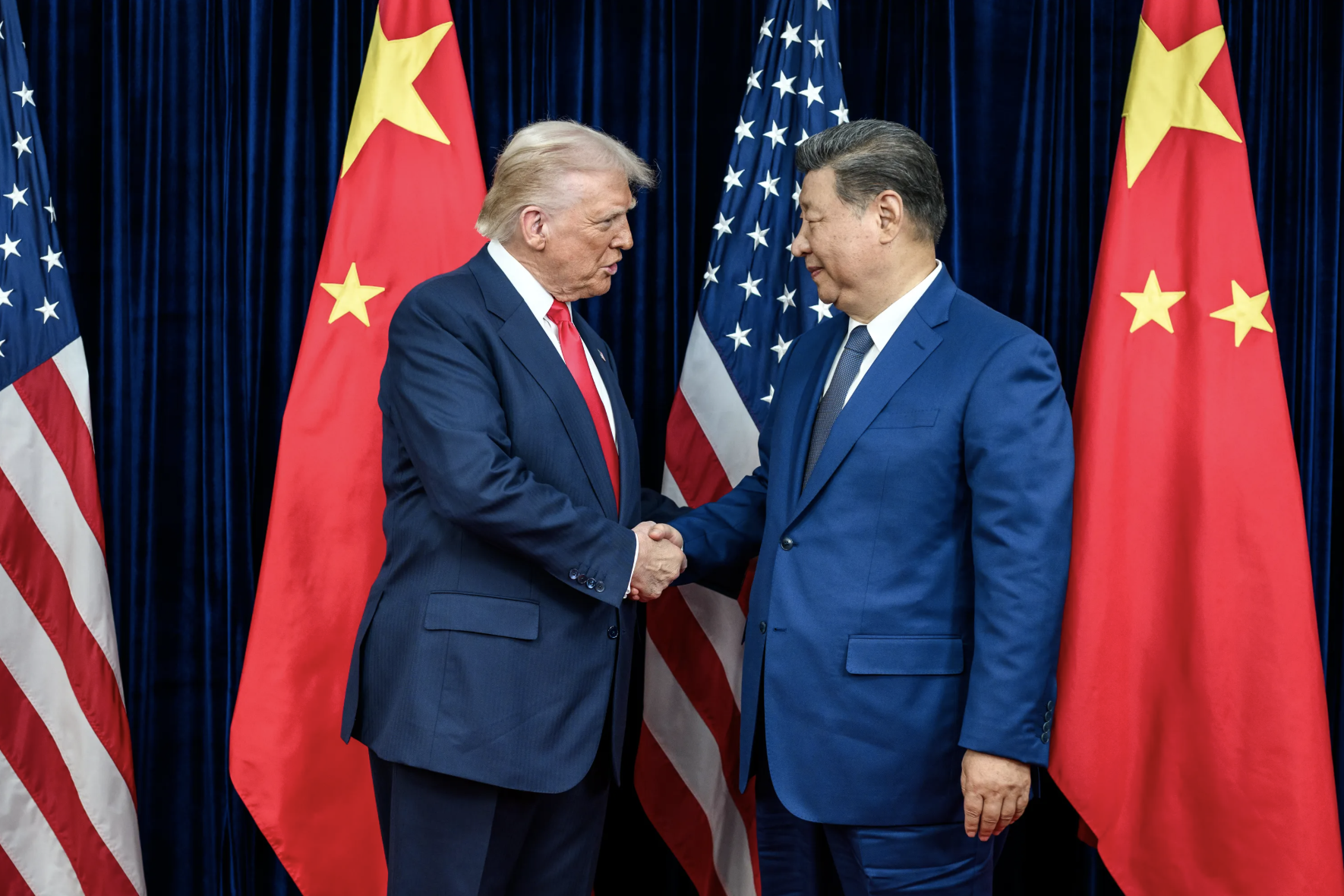
President Donald Trump meeting with President Xi Jinping in Beijing (2026)
For many years now, the United States and China have been in a technological race, each trying to become more technologically advanced than the other. In today's world, the better technology your country produces, the stronger your country will be. This technology mainly comes in the form of AI and the semiconductors that power AI. AI, such as Anthropic’s Mythos, has gotten to the point where it can pose serious cybersecurity threats to entire nations if in the wrong hands due to its ability to find vulnerabilities in software systems. {¹}
When the US began its campaign to control China’s technological rise – through the 2022 CHIPS Act, export controls on advanced semiconductors, and restrictions on Nvidia chips – it predicted that economic pressures in the form of a trade war would slow Beijing down. However, it did the opposite. Xi responded by reframing the entire trade war. In 2024, Xi announced that technology was “the main battleground” of competition among opposing countries and later called for China to take “extraordinary measures” to achieve “decisive breakthroughs” in the semiconductor industry. {²}
The results have been striking. In his 2026 New Year’s address, President Xi declared that 2025 was the year China’s AI and semiconductor technologies reached new heights, with its AI models competing in a race to the top. {³} Domestic chip development in China has soared, and China’s trajectory is apparent; however, no one outside the Chinese government truly knows how well it is faring in the technological realm. Nvidia CEO Jensen Huang said in late 2025 that China was “nanoseconds behind America in AI.” {²} The gap Washington assumed was wide is closing, and AI is becoming an increasingly important force for countries seeking to remain dominant.
But the true mastermind play goes beyond building China’s own capabilities. Xi ensured that the United States could not simply cut China out of the global technology system. But how? The rare earth card.
Rare earth minerals are a group of 17 elements that power many technologies used in our everyday lives {¹¹}. These metals are used in motors in F-35 fighter jets and electronic devices, play a critical role in semiconductor manufacturing in the AI supply chain, and are used in data centers. {⁴} China controls approximately 90% of global rare earth refining and 92% of magnet production, giving Beijing unmatched leverage in any technology negotiation. {⁵} The US would not be as militarily and technologically dominant as it is right now if it weren’t for the rare earth metals imported from China. The hardware of the American military and the technological supremacy the US holds right now rely on rare earth metals from China.
Xi has wielded this leverage very precisely. He has applied export restrictions cautiously – just enough to ensure the US stays at the negotiating table on trade. Not only does the US need China, but China needs the US as well. China relies on exports to foreign markets because its domestic industries are oversaturated. The US remains China’s largest individual destination of exports, with about 14% to 15% of China’s total exports going to the United States. {⁶} Both countries profit from trade with the other, with the US being China’s largest individual trading partner and China being the US’s third-largest trading partner (imports of rare earth metals contribute to China being one of, if not the, most important trading partners despite not being the largest). {⁷}
The problem for the US in this situation is that there is no quick fix in the fast-moving technological race. The US and its allies simply cannot out-mine or outspend China to build dependency in the near term. Xi does not need to win the technological war with the US or the rest of the world: he just needs to remain indispensable long enough for the world to stop imagining it could function without him. Xi needs to maintain China’s status as the world's supplier of the most critical component of the ever-improving AI semiconductors.
On the other hand, China’s relationship with Russia is like that of a big brother. Since Russia’s invasion of Ukraine in 2022, they have become increasingly dependent on China in imports and exports. Beijing is Moscow’s most important export market for its oil and gas, and Russia imports many goods to help its war effort. This “equal” partnership is nowhere near equal: China holds most of the power. Russia needs the revenue from China. Meanwhile, China gets discounted energy (which is becoming increasingly important as the war in the Middle East continues and shipping in the Strait of Hormuz is disrupted), a strategic partner, and a buffer against Western pressures. {⁸}
Putin’s May 2026 visit to Beijing was a perfect representation of the relationship between China and Russia. Xi was seen as holding considerable leverage while Putin sought reassurance that China had not drifted toward the United States after Trump’s visit just days earlier. The fact that Putin felt the need to seek reassurance that China was still fully supporting Russia speaks volumes about the dynamic of their relationship.
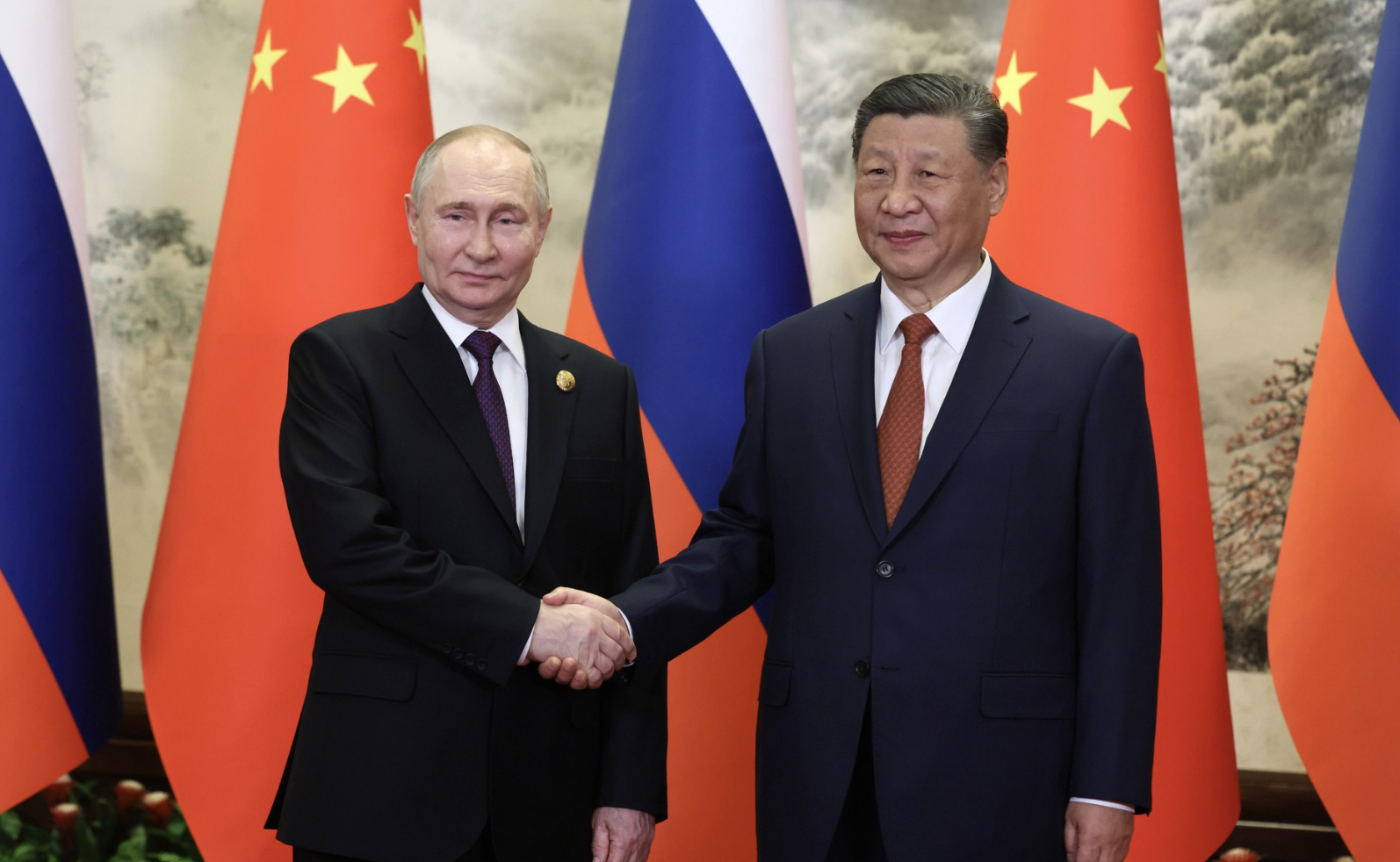
President Vladimir Putin meeting with President Xi Jinping (2024)
Beyond the technological competition is a harder, more dangerous race. Since the 1970s, China has held its nuclear stockpile steady at around 200 warheads, but since Xi came to power in 2012, it has grown to more than 600 and is projected to exceed 1,000 by 2030. {⁹} China is ensuring they are a world leader in every facet: technologically and militarily. Additionally, Xi Jinping met with North Korean Supreme Leader Kim Jong Un to strengthen ties between the two Asian countries and project a united front against the West. {¹⁰} A united push by China, Russia, North Korea, and their allies would represent a formidable challenge for the United States.
Xi Jinping constructed a position so critical to the most powerful nations. The United States needs China to stay in the technological arms race, contain nuclear risk, and stabilize global supply chains, while Russia needs China to survive economically. The US is at war with China, but China is the one supplying the US with what it needs. Neither can afford to lose Beijing to the other, which keeps both the US and Russia at the negotiating table with Xi. China has made itself a necessity.
That said, China is not looking to take sides. The clear signal from the Xi-Trump and Xi-Putin summits is that China is not choosing between the US and Russia. In the past, every major power was forced to take a side, such as in the Cold War. Xi is choosing not to pick a side but to draw on both countries for what they have to offer, creating one of the most strategic geopolitical positions in modern history.
In what America thought was putting China on the defensive, Xi has turned the technological war into a platform to show just how strong a position China truly holds and just how indispensable he is to the rest of the world. China holds control in this new era of AI and technology.
