The First Half is Over: What Does It Tell Us?
War, a new Federal Reserve chairman, record stock highs, and a $725 billion investment into artificial intelligence. The first six months of 2026 produced more economic and geopolitical disruption than most full years.
Here is what happened and why it matters for the second half of the year.
January: The 150-Minute War
At almost 12 am on January 2, President Trump approved the launch of Operation Absolute Resolve. {¹} By 4:29 am, Venezuelan President Nicolas Maduro and his wife, Cilia Flores, were aboard a US aircraft carrier. The operation lasted roughly two and a half hours, with Venezuela’s government reporting more than 100 people killed. Maduro was arraigned in New York on narco-terrorism charges. {²} What comes next for Venezuela remains unclear. President Trump said the US would be heavily involved in running the oil-rich country; however, Maduro’s Vice President, Delcy Rodríguez, was sworn in as acting president, and the US has allowed her to fully run Venezuela, lifting sanctions in April and cooperating. {³}
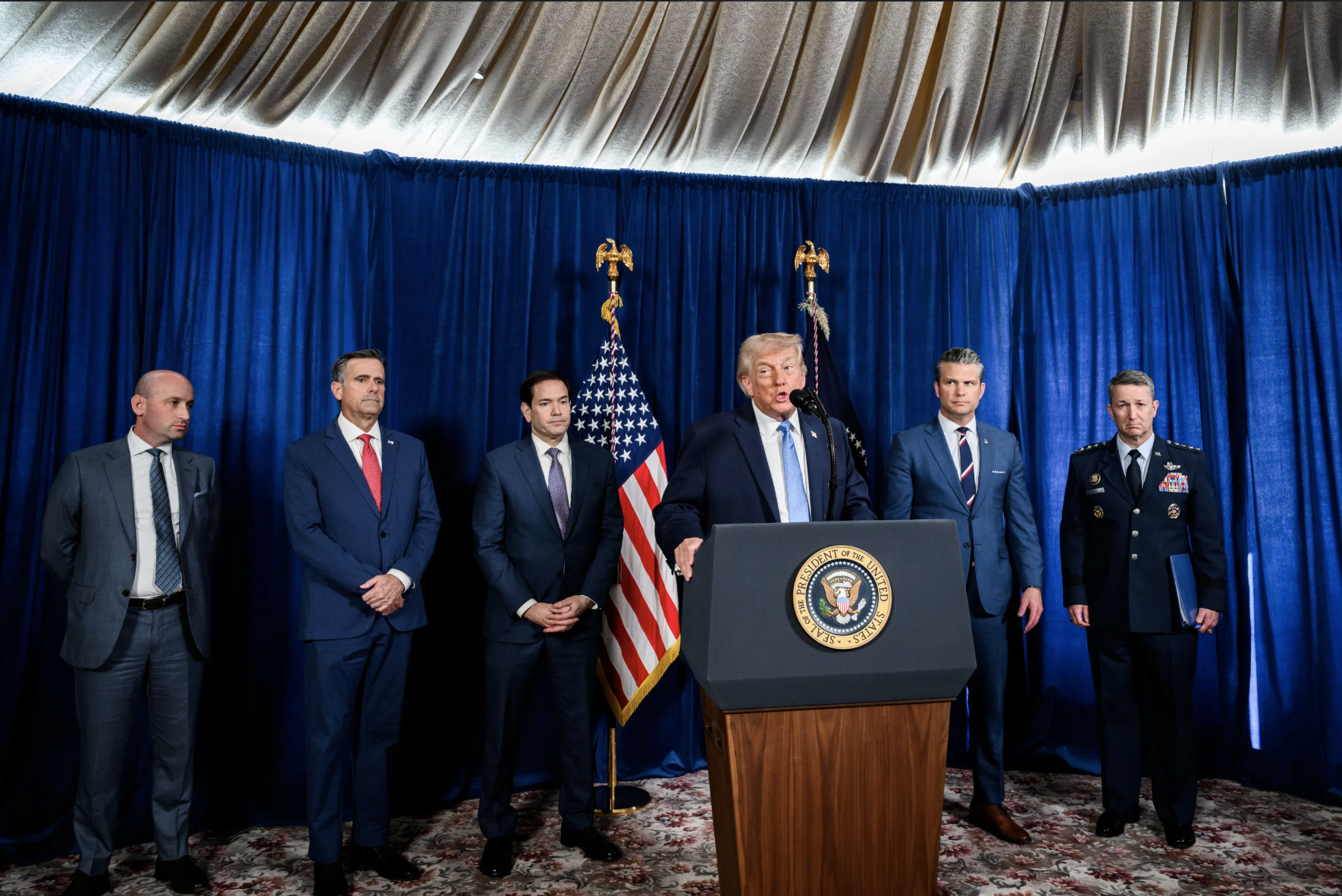
President Donald Trump Delivering Remarks Over the Successful Operation Absolute Resolve
The Jobs Market
Before February’s war reshaped the whole economy, the labor market was already slowing. January saw an addition of 130,000 jobs, but federal employment fell 34,000. Additionally, the Bureau of Labor Statistics (BLS) annual benchmark revision wiped out 862,000 jobs from the 2025 totals. {⁴} February was worse – payrolls fell 156,000. March and April rebounded, and May added 172,000 jobs, well above the 85,000 consensus. {⁵} June saw a cooling in the jobs market, with 57,000 new jobs and an unemployment rate of 4.2%. {⁶} Since October 2024 (the federal workforce peak), government employment is down 11.8% (355,000 jobs). {⁷}
In the age of AI, where jobs can be cut by a line of code, a jobs report in the green is a positive. The good news is that AI is not taking over jobs yet. For some companies, it is the cost of AI that is subtracting jobs, not the AI itself. For other companies, AI has acted as a scapegoat for mass layoffs, sometimes hiding the real reasons.
The Strait
On February 28, US and Israeli forces struck Iran. The Islamic Revolutionary Guard Corps (IRGC) declared the Strait of Hormuz closed. {⁸} Roughly 20% of the world’s oil supply is shipped through the strait, forcing nations reliant on Iranian oil to seek alternative sources (reserves, other suppliers, etc.). As a result, oil prices shot up, with Brent crude touching $120 per barrel after opening the year below $61 per barrel. {⁹} American gas prices rose $1.16 per gallon from the conflict’s start. {¹⁰}
The US stock market reflected the same volatility. The S&P 500 fell 4.3% in Q1, the Nasdaq dropped 7%, and the Dow dipped 3.2%. {¹¹} A ceasefire announced on April 8 briefly sent oil prices down nearly 20%, but the pause in hostilities broke down within two days. {¹²} Now, in July, oil prices have lowered, with gas prices following.
The AI Realm
While war was consuming geopolitical attention, the technology sector soared. Amazon, Microsoft, Alphabet (parent company of Google), and Meta collectively committed roughly $725 billion in capital expenditure for 2026 on AI, up 77% from approximately $410 billion in 2025. {¹³} Goldman Sachs projects the four companies will spend a combined $5.3 trillion from 2025 to 2030. {¹⁴} Companies such as Meta have faced shareholder pushback over hefty AI infrastructure costs. Whether AI revenue will start flowing fast enough to justify the infrastructure costs remains a central unanswered question in markets.
A New Fed
On May 13, Kevin Warsh was confirmed as Federal Reserve chairman, succeeding Jerome Powell. His first Fed meeting held interest rates steady at 3.5% to 3.75% on June 17. {¹⁵} More notable than the decision to keep rates the same was Warsh’s statement: it was considerably smaller, about a 60% reduction, forward guidance/activity was dropped entirely, and Warsh declined to submit his own rate projections. {¹⁶} 9 of 18 Fed officials expect a rate hike before the year ends. {¹⁷}
The Consumer Price Index (CPI) for May stood at 4.2% year-over-year. The Fed has now missed its 2% inflation target for five consecutive years. {¹⁸}
On the same day, June 17, the US and Iran signed a memorandum of understanding to reopen the strait for 60 days (see the previous article for more details); however, 48 hours later, Iran closed the strait again over an Israeli-Hezbollah dispute. {¹⁹} The situation remains unclear, with shipping across it not yet at full capacity.
The Financial Markets
Markets closed H1 with the S&P up 8%, the Nasdaq up 11.1%, and the Dow up 8.85% for its best first half in five years. All 3 reached all-time highs in H1, with the Dow soaring above 50,000, the S&P rising above 7,500, and the Nasdaq reaching over 27,000. {²⁰}
Q2 alone produced a 14.87% S&P gain and a 21.41% Nasdaq gain, the best quarterly returns for both indexes since 2020. {²¹} The national average gas price in May stood at $4.54 per gallon, up 44% from a year earlier. {²²}
However, consumer sentiment hit 44.8 in May, the lowest reading since the University of Michigan survey began in 1952. That is worse than the readings during 2008 and Covid. {²¹}
Moving Forward
The gap between what markets price and what households feel is the defining economic tension of the year. Even though markets are at all-time highs, consumers are feeling very volatile and uneasy. The Strait of Hormuz MOU expires in mid-August. The Fed’s next meeting is in late July, so keep an eye out for interest rate movement. Because inflation rates are above the Fed’s target, the Fed may hike rates; however, President Trump has expressed support for lowering interest rates for consumers. The labor market is softening. AI is accelerating. The first half created the conditions. The second half will determine the outcome.
